Best performing cooker on the market
Home of the 7 minute boil
Best performing cooker on the market
Home of the 7 minute boil




Last updated:
Frying a whole turkey delivers crisp skin and juicy meat while freeing up oven space for sides. The equipment matters, but so do the oil, temperature, bird size, and preparation steps. For first-timers, a reliable turkey fryer kit is only one part of a good plan.
If you are comparing fryers, start with the size of turkey you normally cook, whether you already own a burner, and how much off-season versatility you want. HPC outdoor deep fryers can also handle fish, wings, fries, onion rings, steaming, and slow cooking, so the fryer won't sit unused after Thanksgiving.
For most outdoor turkey frying, peanut oil is a popular first choice because it tolerates high heat well and has a neutral-to-light flavor. Canola and vegetable oil are also common options. HPC specifically recommends choosing a high-smoke-point oil rather than focusing on one brand or a single "best" turkey fryer oil.
The bigger issue is temperature control. HPC turkey-frying guidance calls for preheating the oil to about 350°F before slowly lowering in a completely thawed, thoroughly dried turkey. Adding the bird will drop the oil temperature, so monitor the thermometer and adjust the burner rather than turning the flame up as high as possible.
If anyone at the table has a peanut allergy, choose a different high-heat oil and follow the product label and your guests' dietary requirements. Whichever oil you use, measure your fill level before heating. HPC's step-by-step turkey frying guide explains the water-displacement method for determining how much oil your pot needs without overfilling it.

High Performance Cookers fryers use patented Tunnel Tube Technology on the bottom of the pot. Welded aluminum channels increase the surface area exposed to heat, helping the pot absorb and distribute heat more efficiently.
HPC fryers:
That heat recovery matters when a cool turkey is lowered into hot oil. Instead of relying on an oversized flame, the goal is to return to the target temperature in a controlled way and hold it steadily through the cook.
The best setup depends on how many birds you cook, whether you need a burner included, and whether you'll also use the fryer for other outdoor meals. Here is how HPC's three common turkey-frying configurations compare.

30 Quart Turkey Fryer is the straightforward choice for households that want a complete propane-powered setup rather than sourcing a separate burner. The 30 QT pot fits a turkey up to about 20 pounds.
First-time turkey frying, smaller family gatherings, and cooks who want a complete system with the pot and propane heat source already matched.

60 QT Dual Turkey Fryer is built for cooks who need more capacity. The dual rack allows two turkeys up to about 20 pounds each to be fried at the same time, making this a better fit for larger families, events, and smaller commercial operations.
Experienced fry masters, larger holiday crowds, and buyers who would rather have extra capacity than run multiple back-to-back turkey cooks.

30 QT Performance Seafood/Stock Pot is aimed at cooks who already own a compatible heat source. It keeps the core frying equipment without making you buy another burner.
Casual users, first-timers with an existing burner, and anyone building a more modular outdoor cooking setup.
A practical best turkey fryer recipe starts with a fresh or completely thawed turkey, usually in the 10-to-14-pound range for easier, more even cooking. Pat the bird dry inside and out, remove the giblets and plastic pieces, then season with a dry rub, Cajun seasoning, or an injectable marinade if you prefer.
Heat the oil to about 350°F, lower the turkey slowly, and fry for roughly three to four minutes per pound. Cooking time is only a guide. Use a meat thermometer and confirm the turkey reaches a safe internal temperature of 165°F before serving. HPC's deep-fried turkey recipe gives you the full process in one place.
The best turkey fryer recipe is also one you can execute safely. Fry outdoors on a stable surface, keep the fryer away from structures and flammable materials, never add a frozen or wet turkey to hot oil, and keep children and pets away from the cooking area.
Do not guess by filling the pot to the top. Before cooking, place the thawed turkey in the unheated pot, add water until the bird is covered, remove the turkey, and mark the water line. After you empty and dry the pot, that mark shows approximately where your oil should reach. See the step-by-step turkey frying guide for full setup details.
Yes. HPC lists peanut, canola, and vegetable oil as common frying choices because they can handle the high heat used for outdoor frying. The best turkey fryer oil for your cook should have a suitably high smoke point and should also make sense for your flavor preferences, allergies, and budget.
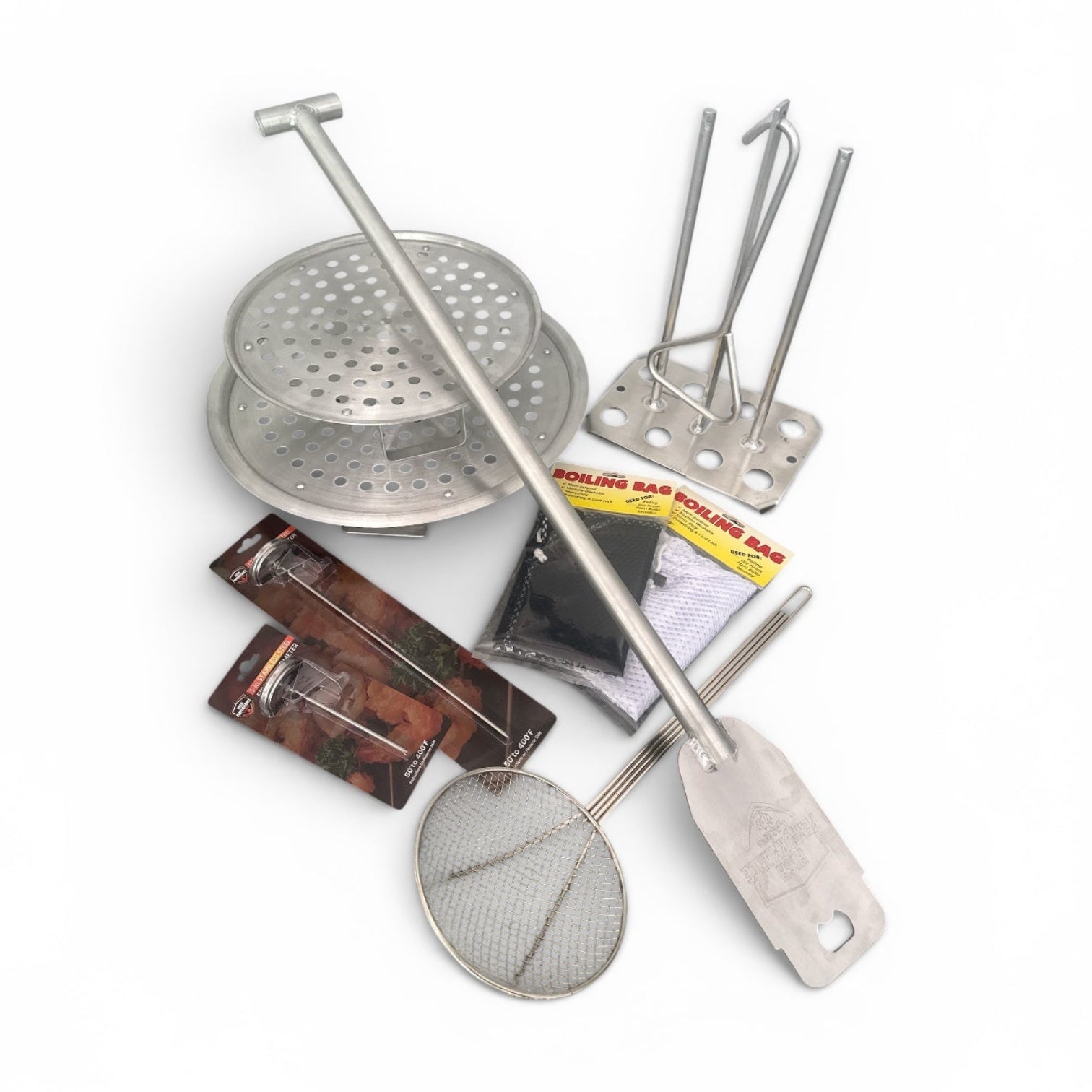
A common target is about 350°F. That is also convenient because it is close to HPC's turkey-frying temperature. Fry Hush Puppies in small batches so the oil does not cool too quickly, and wait for the temperature to recover between batches (or just follow our recipe!). If you want to use your fryer for sides as well as turkey, browse HPC fryer racks and inserts for compatible accessories.
Plan on roughly three to four minutes per pound, but don't rely on time alone to decide when the bird is done. Use a thermometer to confirm an internal temperature of 165°F. For a 12-pound bird, that general timing works out to about 36 to 48 minutes.
Yes. Depending on your pot and accessories, an HPC fryer can also do fish, chicken wings, fries, onion rings, steaming, slow cooking, and other outdoor recipes. A steamer basket insert can expand the setup further when steaming is part of the menu.
For one turkey and smaller gatherings, the 30 QT powered setup keeps things simple. For larger groups or two birds at once, the 60 QT dual fryer provides the extra room. If you already have a compatible burner, the 30 QT non-powered pot keeps the purchase focused on the pot and accessories you need.
Once the equipment is sorted out, the best turkey fryer oil and a dependable best turkey fryer recipe become the next two decisions. Review the turkey frying guide for preparation and safety details, or contact High Performance Cookers for help choosing the right fryer setup.
Jay Meral is the founder of High Performance Cookers and an outdoor cooking enthusiast who writes about turkey frying, seafood boils, temperature control, and equipment designed for large-format outdoor cooking.

Jay Meral is a businessman, writer, and cook. He has been married to his wife, Rhonda, for over 27 years and is a proud father to his three kids. A lifelong entrepreneur, Jay discovered his passion for outdoor cooking through entertaining family and friends. That passion led him to the Tunnel Tube Cooker, where he saw the potential to transform the industry. Investing in the technology, he launched High Performance Cookers and has since grown the brand to new levels and expanded to different markets. Always striving to improve, Jay’s ultimate goal is to produce the highest quality products that every customer will be proud to own.